
Can AI Characters Be Used For Roleplay?
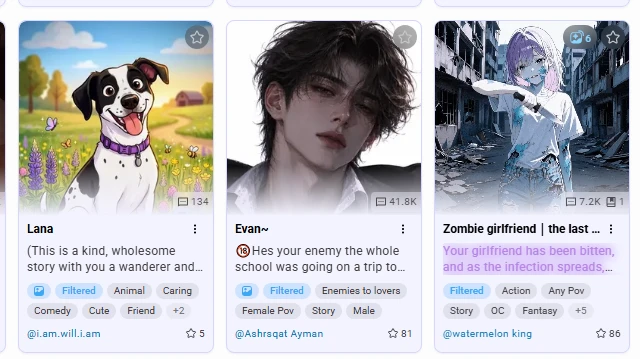
AI characters can be used for roleplay, and millions of users already use them for storytelling, gaming, learning, and personal conversations. Surveys from 2024 showed that AI companion platforms attracted more than 100 million users globally, while roleplay-focused communities reported high engagement because AI characters can respond instantly, remember details, and adapt to different scenarios. Unlike traditional fictional characters with fixed scripts, AI characters create personalized conversations based on user input, making them suitable for interactive roleplay experiences.
Roleplay has existed for decades through tabletop games, online forums, and video games. AI characters add a new layer by allowing one person to interact with a character that can generate responses in real time. In 2023 and 2024, advances in large language models improved natural language generation, allowing AI characters to maintain longer conversations and produce more consistent personalities.
AI roleplay works because users are not only reading a story; they are participating in the creation of the story.
Traditional roleplaying systems often rely on predefined dialogue. A game character may have 20 or 50 possible responses created by developers. AI characters can generate thousands of possible replies depending on context, previous conversations, and user preferences. A 2024 study involving more than 1,000 participants found that users reported higher engagement when interactive characters responded in personalized ways instead of repeating fixed dialogue.
The ability to maintain personality is one reason AI characters are becoming popular. Developers usually create character profiles that include background information, speaking style, personality traits, goals, and relationship settings. These details help the AI maintain a recognizable identity during conversations.
For example, an AI character designed as a detective may ask questions, analyze fictional clues, and guide users through a mystery story. A fantasy character may remember previous conversations about quests, friendships, or decisions. In roleplay communities, users often spend hours creating customized characters because personality design strongly affects the quality of interaction.
The use of AI characters has expanded beyond entertainment. Many users now use AI roleplay for creative writing, language practice, and communication training. Language learners can practice conversations with AI characters without waiting for another person. In professional education, virtual characters are used to simulate interviews, customer conversations, and classroom scenarios.
A 2022 research review on conversational learning tools showed that students who practiced regularly with interactive systems often increased their speaking frequency by more than 40% compared with traditional practice methods. The ability to repeat conversations multiple times allows learners to improve through repeated exposure.
The entertainment industry is also exploring AI-powered characters. Video game companies are testing AI NPC systems that allow characters to respond differently depending on player choices. Instead of following a fixed storyline, players can create unique conversations with game characters.
Several game development projects released between 2023 and 2025 focused on improving NPC conversations through generative AI. These systems combine language models with character databases to help maintain consistent behavior. Developers still use human writers because AI-generated dialogue needs review for quality and storytelling consistency.
AI roleplay is also used in romantic and adult-themed conversations. Some platforms provide personalized character interactions, including services related to ai sex chat. Users may choose specific personalities, communication styles, and fictional scenarios. According to industry reports from 2024, AI companion applications became one of the fastest-growing categories in consumer AI, with millions of monthly active users across different platforms.
However, AI roleplay has limitations. One major issue is that AI characters do not actually experience emotions. They generate responses by analyzing language patterns and conversation history. Although their replies may appear caring or expressive, the system does not have personal feelings or real-life experiences.
Another issue is memory. Some AI characters can remember information during a conversation, but long-term memory remains a technical challenge. A character may forget previous details or provide inconsistent answers after extended conversations. Developers often add memory systems and character instructions to improve stability.
| Feature | Traditional Characters | AI Characters |
|---|---|---|
| Response style | Prewritten dialogue | Generated responses |
| Personalization | Limited | Adjusted to users |
| Conversation length | Usually fixed | Can continue for long sessions |
| Character changes | Controlled by developers | Influenced by interaction |
| Creation process | Requires full scripting | Can combine templates and AI generation |
Privacy is another important topic for AI roleplay platforms. Conversations may contain personal preferences, creative ideas, or private information. Many users have expressed concerns about how companies store and process chat data. A 2024 survey of AI application users found that around 45% of respondents considered data privacy an important factor when choosing AI services.
Character quality depends heavily on design. A simple instruction such as “friendly assistant” usually creates a generic personality. More detailed character settings produce more stable results. Developers often define speech patterns, interests, personal history, and behavioral limits to create more believable characters.
The future of AI roleplay will likely include voice interaction, visual avatars, and real-time environments. In 2025, improvements in speech generation allowed AI characters to produce more natural conversations with lower response delays. Combining voice, facial animation, and language models may create experiences closer to interacting with virtual actors.
A successful AI roleplay character needs both technical ability and careful character design.
AI characters can already support many forms of roleplay, from fictional storytelling to education and entertainment. Their popularity comes from their ability to provide personalized conversations, immediate responses, and flexible scenarios. As AI technology improves, roleplay experiences will continue becoming more interactive while developers focus on improving consistency, privacy, and user control.
Found this useful?
Join 14,200+ NSUK students trading safely on campus. List something in minutes — keep your semester cash.